Texas Roadhouse
- 4.8
- Rating
- 5.00M
- Installs
- Free
- Price

 Analysis by App-foxy
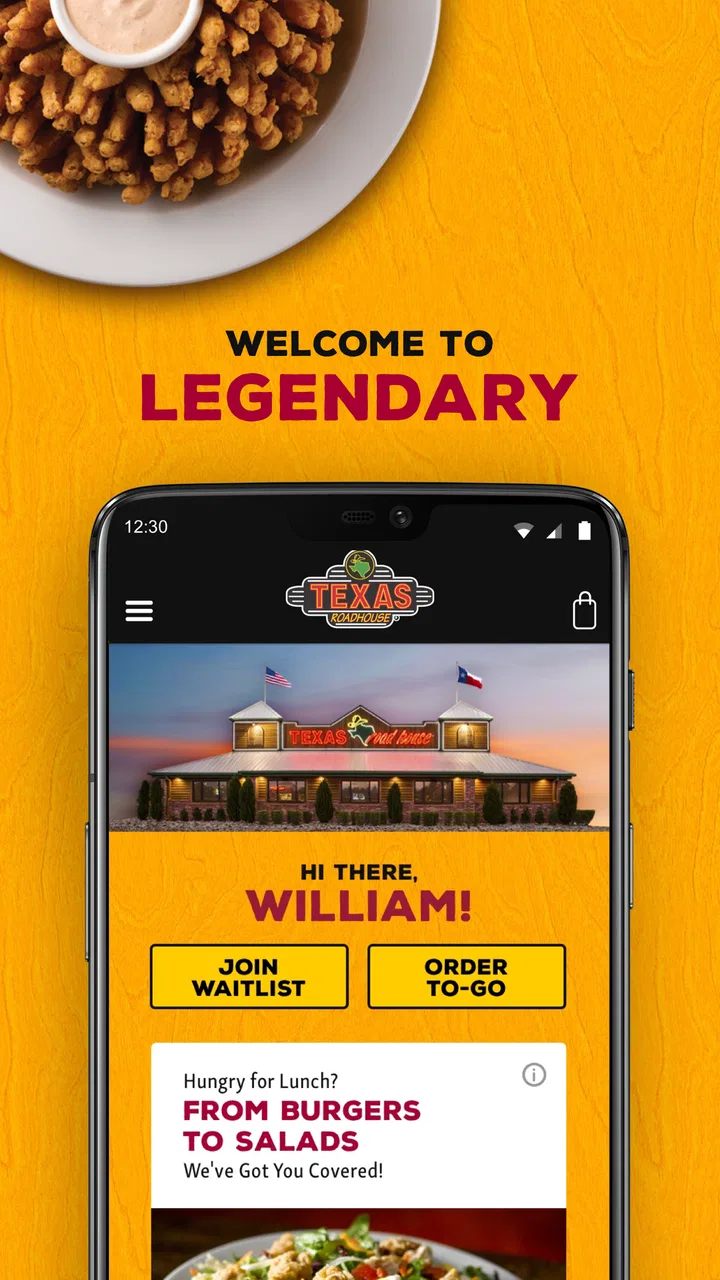
My first impression of the Texas Roadhouse app was that it is most useful when I am already thinking about a meal there. It does not try to be a general food planner or a broad restaurant discovery tool. Instead, this free Food & Drink app from Texas Roadhouse, Inc keeps the restaurant’s menu and ordering experience close at hand, which makes it easy to decide whether it deserves a permanent place on my phone.
The app has been available since July 4, 2016, and its current version is 8.4.0. That history matters because this is not a brand-new experiment that still feels unfinished. It has reached more than a million installs, and the average rating sits at 4.8 from roughly twenty thousand ratings, with about 7.9 thousand written reviews. Those figures suggest that the core experience works well for many diners, but I still found that its long-term value depends heavily on how often Texas Roadhouse is part of my normal routine.
What the first week feels like
During the first week, the main appeal is convenience. I can open the app when someone suggests Texas Roadhouse, browse the available choices, and move from appetite to decision without switching between a browser, a map app, and a separate ordering service. That focused purpose is a strength. I do not have to sort through unrelated restaurants or advertisements for places I will not visit.
You May Also Like

 Blood Strike: 2.5 Anniversary
Blood Strike’s Loadouts Turn Every Drop Into a Tactical Gamble
A close look at Blood Strike’s custom loadouts: how fast access to signature weapons reshapes its battle royale rhythm, rewards preparation, and narrows the gap between fights.

 Pandora - Music & Podcasts
Pandora’s Music Is Easy to Start, but Harder to Recover
Pandora’s strength is its low-effort path from a seed to a station. Its weak spot is how much confidence it asks you to place in connection, setup, and quiet recovery.

 8 Ball Pool
 Is Built on Rivalries, Rematches, and Routine
A close look at the rivalries, rematches, shared routines, and unanswered safety questions that turn a quick pool match into a persistent mobile community.

 Samsung Music
’s Quiet Strength Is Playing What You Already Own
Its reach comes less from spectacle than from dependable access to a personal library. That simplicity is both the app’s strongest retention engine and its ceiling.

 AccuWeather: Weather Radar
AccuWeather Review: A Quick, Clear Forecast for Everyday Decisions
For everyday plans, the best forecast is the one you can understand quickly. AccuWeather makes rain timing, radar, and local conditions easy to act on, with a few trade-offs.

 Hill Climb Racing
Why Hill Climb Racing Still Turns Crashes Into One More Run
A tiny car, a bumpy hill and one more upgrade: Hill Climb Racing keeps resurfacing because its simple chaos makes every near-miss feel personal.
More From Our News Desk
View All News


The menu is the natural starting point. I found it more useful than relying on memory, especially when eating with other people who want different kinds of meals. One person may be interested in a steak, another in a lighter option, and someone else may simply want to see what sides or familiar favorites are available. Having the restaurant’s own presentation in front of me makes the conversation quicker and reduces the chance of choosing something based on an outdated recollection.
I also like using the app before leaving home rather than waiting until I am seated. That small change improves the meal in a practical way: I can think about what I want while I am not hungry, compare choices calmly, and avoid holding up a group once everyone is ready. For families, this is especially helpful because children can look at the menu before the restaurant visit instead of making a rushed decision at the table.
The strongest first-week benefit is preparation rather than entertainment. This is not an app I open to browse for fun. I open it because I want to make a restaurant decision, check the available choices, or handle part of the ordering process. That sounds modest, but it is exactly why the app feels useful when the situation matches its purpose.
Useful before a planned meal
A realistic example is a busy weekday evening when I am deciding whether to cook or go out. I can check the Texas Roadhouse menu before messaging the rest of the group, then use what I see to settle the question quickly. If the choices do not suit someone’s preferences, I know that before making the trip. If they do, the app becomes a simple planning tool rather than another source of indecision.
It is also handy for a first visit. Someone unfamiliar with the restaurant can inspect the menu in advance and arrive with a reasonable idea of what to order. That removes some of the pressure that comes with a large menu and a busy dining room. I would not describe the app as a replacement for the full restaurant experience, but it does make the transition from “Should we go?” to “What do we want?” smoother.
The free price lowers the barrier to trying it, and the Everyone content rating makes it suitable for a household device shared by different age groups. I would still judge the app by its practical value rather than installing it simply because it costs nothing. A free app that rarely fits my habits is still unnecessary clutter.
Where the convenience has limits
The first-week experience is not perfect. A restaurant app naturally has a narrower purpose than a general delivery or restaurant platform. If I am undecided about the type of food I want, the Texas Roadhouse app cannot help me compare it with a nearby Italian restaurant, a grocery option, or another steakhouse. For broad discovery, I would rather use a map or delivery app first and then move here once Texas Roadhouse is the likely choice.
That distinction is important. The app is strongest when the restaurant has already entered my plans. It is less useful as a tool for discovering somewhere new. I also would not rely on it as my only source of information when a meal involves unusual dietary needs or a complicated group request. The app helps me inspect the restaurant’s choices, but careful diners should still confirm details directly when an ingredient or preparation method matters.
Another trade-off is that a dedicated restaurant app can feel excessive for an occasional visitor. If I eat at Texas Roadhouse once every few years, opening a mobile browser may be simpler than keeping a dedicated app installed. The first-week appeal is therefore real, but it does not automatically become lasting value.
Whether it earns a place after the novelty fades
I find that the clearest test of a restaurant app is what it helps me do when a meal is no longer new or exciting. In this section, I’m weighing whether its focused menu and planning role can become a useful habit, while also considering how different people and situations affect that judgment. The key question is not whether it has a place on every phone, but whether it removes enough friction for the way you actually dine.
Month-to-month value depends on repetition
After the initial curiosity wears off, I judge the app by how often it removes a small inconvenience. For a regular Texas Roadhouse customer, that can be enough to justify keeping it. Repeated menu checks, planning meals for a family, and returning to the restaurant’s ordering flow are more valuable than any one exciting feature. The app becomes part of a routine: decide on the restaurant, check the choices, prepare the order, and move on.
I find this recurring value most convincing for people who visit the restaurant several times during the year or who often organize meals for others. A parent arranging dinner for a family can use it to collect preferences before leaving home. Someone planning a casual gathering can review the menu without passing a phone around at the table. A person who usually orders the same meal can use the app as a quick confirmation instead of searching again from scratch.
For occasional diners, the balance changes. The app may still be useful on the day of a visit, but it may not offer enough repeated benefit to remain installed between visits. In that case, the better habit is to install it when needed, use it for planning, and remove it if it no longer serves a purpose. There is no reason to treat a restaurant app as permanent simply because it worked once.
The large user base and strong average rating give me confidence that the basic idea has staying power, but popularity is not the same as personal usefulness. My own decision would be based on frequency. If Texas Roadhouse is a familiar part of my monthly dining pattern, the app makes sense. If my restaurant choices change constantly, a broader food app is likely to earn more regular attention.
A practical workflow for repeat users
I get more value by using the app at specific moments instead of opening it randomly. Before a planned meal, I check the menu and make a short list of realistic choices. For a group, I ask everyone to decide before we leave. Once the restaurant is chosen, I use the app to reduce the amount of discussion needed at the last minute.
That workflow also exposes an important limitation: the app cannot solve every part of a restaurant visit. It can support the decision, but it does not replace judgment about travel time, table availability, a group’s changing appetite, or special requests. I see it as one step in the process, not the entire process.
One non-obvious advantage is that advance browsing helps me separate menu curiosity from actual ordering. When I am hungry in the restaurant, I am more likely to choose quickly or follow someone else’s suggestion. Looking earlier gives me space to compare the meal with the occasion and my budget, even though the app itself is free. That is a small behavioral benefit, but it is one of the reasons I would return to it.
Maintenance is light, but not invisible
The maintenance burden is fairly low for a focused restaurant app. I do not need to learn a complicated system, build a profile just to browse, or spend time customizing the experience before it becomes useful. The current version, 8.4.0, indicates an actively maintained product rather than an abandoned download, and the app’s long availability reinforces that impression.
Still, maintenance has two sides. The developer needs to keep menu information and ordering behavior aligned with the restaurant, while I need to keep the app updated if I want the smoothest experience. A restaurant app becomes frustrating quickly when a menu item, location detail, or ordering step does not match what happens in person. I would therefore update it when prompted rather than treating it like a static menu saved on my phone.
There is also the ordinary maintenance of deciding whether the app deserves storage space and notification access on my device. I prefer to keep only apps that I use repeatedly. If I notice that I am always opening a general search tool instead, the dedicated app has lost its place in my routine. That is not a criticism of Texas Roadhouse specifically; it is the natural test every single-restaurant app has to pass.
For someone using an older compatible device, the minimum operating system is Android 7.0 or later. That makes the app accessible to a wide range of Android users, although compatibility alone does not guarantee that every older phone will feel equally quick. I would leave enough time before a meal to update or open the app rather than discovering a problem while a group is waiting.
What can cause fatigue over time
The biggest source of fatigue is repetition without a new need. If I already know what I want, already know the restaurant, and am not placing an order through the app, opening it may add little. A dedicated menu can feel helpful at first and unnecessary later, especially for someone who visits infrequently.
Another source of fatigue is the narrow scope. Unlike a broad food platform, this app cannot become my central place for comparing restaurants, tracking every meal, or managing a varied dining routine. Its focus is also its boundary. I appreciate that it does not try to be everything, but I would not expect it to replace the broader tools I use for discovering restaurants or coordinating delivery from multiple places.
There is a human limitation too: menus are easy to browse, but group decisions remain difficult. The app can show choices to several people, yet it cannot settle disagreements about where to eat or what everyone should order. I have found that the best use is to make those conversations shorter, not to pretend the app can remove them.
Users with strict dietary requirements should approach the app thoughtfully. Browsing the menu is useful for identifying possibilities, but I would not make assumptions about allergens, cross-contact, or preparation details based only on a quick screen. In those situations, speaking with restaurant staff is the safer step. This is one of the clearest cases where a dedicated app is helpful but not sufficient.
How it compares with broader food alternatives
Compared with a general restaurant-search app, Texas Roadhouse offers a more direct path to one brand’s menu. I spend less time filtering out unrelated restaurants, and the information feels more relevant once I have already chosen the restaurant. The disadvantage is obvious: that focus has no value when I am still deciding what kind of meal I want.
Compared with a delivery platform, the dedicated app can feel cleaner for an in-restaurant or brand-specific decision, while the delivery platform may be better for comparing fees, cuisines, and multiple nearby choices. I would use the broader service when convenience means “bring me something from anywhere,” and this app when convenience means “I have chosen Texas Roadhouse; help me handle the next step.”
Compared with simply using a mobile browser, the app’s advantage is quick access and a more deliberate restaurant-focused experience. The browser’s advantage is that it does not require another installed app. For a rare visitor, the browser may win. For a repeat customer, the dedicated app can save enough small steps to justify itself.
Who should keep it installed
I would recommend keeping it installed for regular Texas Roadhouse diners, families who plan meals together, and anyone who prefers checking a menu before arriving. It is also a sensible choice for people who dislike making decisions under pressure in a busy restaurant. The ability to prepare in advance is more valuable than the app’s novelty.
I would be less enthusiastic for someone who rarely visits the restaurant, prefers trying new places every week, or already has a general food app that handles all restaurant planning. The dedicated focus may feel restrictive rather than convenient. I would also suggest caution for users who need detailed dietary confirmation, because an app should support that conversation rather than replace it.
The app is free, which makes testing the fit easy. My advice would be to use it for one planned visit and then ask a simple question: did it save a meaningful amount of time or reduce uncertainty? If the answer is yes and that situation repeats, it has earned its place. If not, uninstalling it is perfectly reasonable.
My long-term verdict
In my experience, the Texas Roadhouse app earns lasting space only through habit, not through novelty. It is a focused Food & Drink companion that makes menu planning and restaurant-specific decisions more convenient. The strongest reason to keep it is repeated use before meals, especially when I am coordinating with family or friends.
I like that the app stays centered on the Texas Roadhouse experience instead of becoming a noisy, general-purpose food directory. I also appreciate the low financial barrier and the broad accessibility represented by its Everyone rating. At the same time, I would not install it expecting restaurant discovery, comprehensive dietary guidance, or a replacement for every other food tool on my phone.
My recommendation is simple: keep it if Texas Roadhouse is already part of your regular dining routine; skip it if you only visit occasionally. For the right user, the value is quiet and recurring. It saves preparation time, makes group decisions easier, and keeps the restaurant’s choices available when needed. For everyone else, the same focused design that makes it convenient can make it feel unnecessary after the first visit.
That is why I see Texas Roadhouse as a practical companion rather than an essential app. It does not need to dominate my phone to be worthwhile. It only needs to make the next Texas Roadhouse meal easier often enough that opening it becomes a natural part of planning.
FAQs for Texas Roadhouse
01What platforms is the Texas Roadhouse app available on?
The Texas Roadhouse app is available for both Android and iOS platforms. This ensures that users with smartphones from a wide range of manufacturers can download and enjoy the app's features, such as ordering food, finding locations, and accessing special offers. Simply search for it in the Google Play Store or Apple App Store.
02Can I use the Texas Roadhouse app to place an order for pickup or delivery?
Yes, the Texas Roadhouse app allows users to place orders for both pickup and delivery at participating locations. The app provides a seamless ordering experience with a menu that is easy to navigate, ensuring you can quickly select your favorite meals and customize them to your liking before checking out.
03Does the Texas Roadhouse app provide nutritional information for its menu items?
The app offers detailed nutritional information for most menu items, helping users make informed choices based on dietary needs. You can view the calorie count, ingredients, and allergen information directly from the app, making it a useful tool for those tracking their nutrition or managing food allergies.
04Are there any special offers or rewards available through the Texas Roadhouse app?
Yes, the Texas Roadhouse app often features exclusive offers and rewards for its users. By downloading the app and creating an account, you can receive notifications about special promotions, discounts, and even earn rewards points with every purchase, which can be redeemed for future savings.
05How can I find the nearest Texas Roadhouse location using the app?
The app includes a location finder tool that helps you easily locate the nearest Texas Roadhouse restaurant. By enabling location services on your device, the app will provide a list of nearby locations, complete with addresses, contact information, and directions, ensuring you can plan your visit effortlessly.
Pros
- User-friendly interface and navigation.
- Wide variety of American cuisine recipes.
- Includes helpful cooking tips and tricks.
- Frequent updates with new dishes.
- Offline access to saved recipes.
Cons
- Limited to Texas Roadhouse restaurant dishes.
- No nutritional information provided.
- Requires account for full access.
- Occasional app crashes reported.
- Limited customization for dietary needs.

Texas Roadhouse
Gallery